In the heart of the Tuscan coast, in Cecina, a cultivation takes shape that tells a story far beyond floriculture: it speaks of vision, expertise, and collaboration. It is here that Patrizia Lotti and Saverio Paretti, partners of Flora Toscana, have been cultivating for years one of the most fascinating and complex botanical families: the Proteaceae.
Their experience and specialization were also featured by the newspaper Il Tirreno, which dedicated an in-depth article to the company on April 24, 2026.
Originally from distant environments such as Australia and South Africa, these plants stand out for their spectacular blooms: structured corollas, unusual shapes, and colors ranging from deep red to the most delicate pastel tones. Yet behind their beauty lies a far-from-simple agronomic challenge.
A story of evolution and specialization
Patrizia and Saverio’s company, Lotti Patrizia Società Semplice Agricola, was born from a path that combines different experiences: Saverio moved from Lombardy in the late 1970s, while Patrizia carries on her family’s agricultural heritage. After an initial phase focused on horticulture, their encounter with the floriculture sector and with Flora Toscana marked a turning point.
It was through the cooperative that an initial project on cut flowers took shape, followed—at the beginning of the 2000s—by the introduction of Proteaceae. This was anything but an obvious choice: it stemmed from a shared intuition and was developed through international relationships and exchanges of expertise.
Over the years, the company has increasingly focused on potted plant production, identifying in this niche an ideal balance between production sustainability and the enhancement of quality.
The agronomic challenge of Proteaceae
Growing Proteaceae in Italy, and especially in pots, means dealing with a range of technical complexities. These plants are adapted to poor, often rocky soils and have a very specific way of absorbing nutrients: excessive fertilization can even be harmful.
For this reason, cultivation requires care, experience, and a precise agronomic approach. From substrate selection to irrigation management and light control, every phase must be carefully calibrated.
Over time, Patrizia and Saverio have developed solid know-how, built through testing, observation, and continuous improvement—a long journey that has led to a structured and recognized production today.
Production and varieties: distinctive quality
Within approximately 6,500 square meters of greenhouses, the company produces between 25,000 and 30,000 plants each year.
Among the varieties grown:
- Telopea, with large, bright red flowers
- Protea cynaroides, also known as Protea Rex, a symbol of South Africa
- Leucospermum, characterized by its typical “pincushion” shape
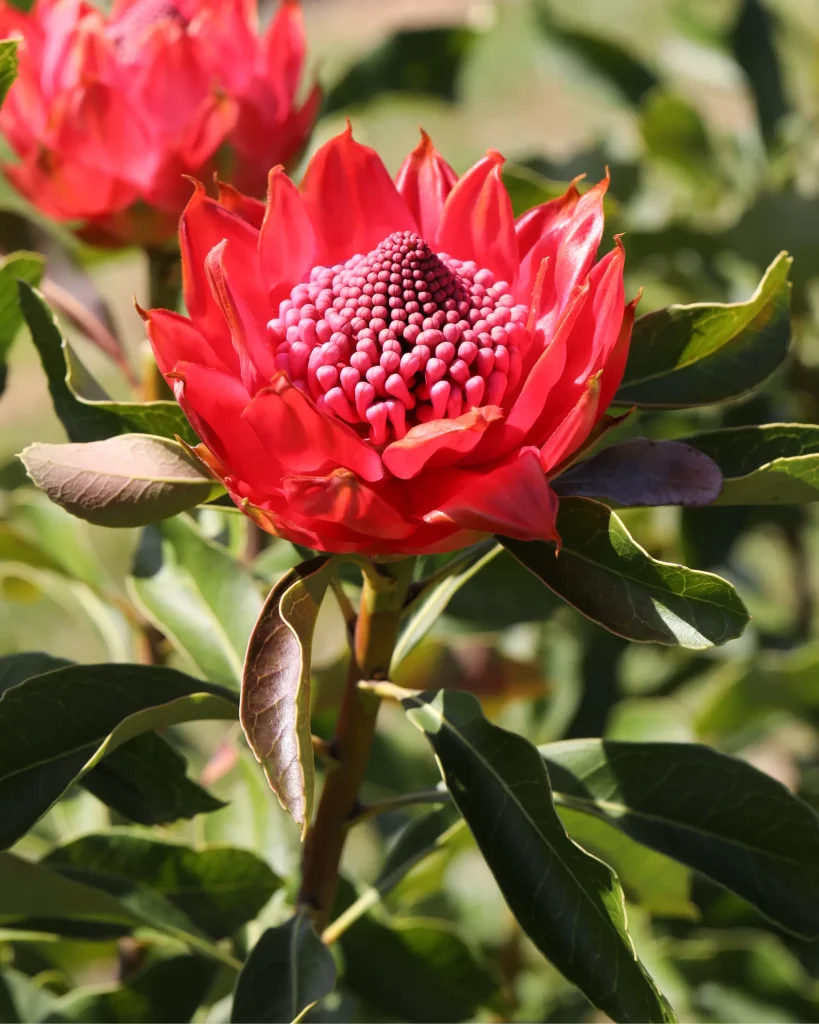
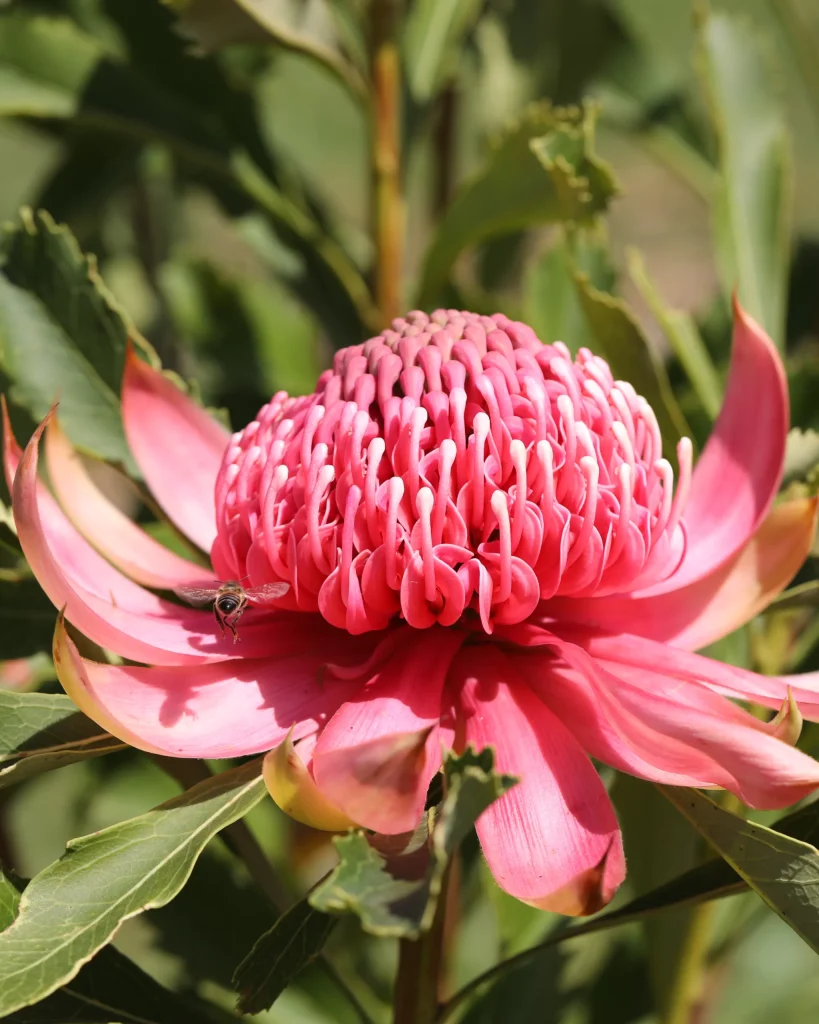
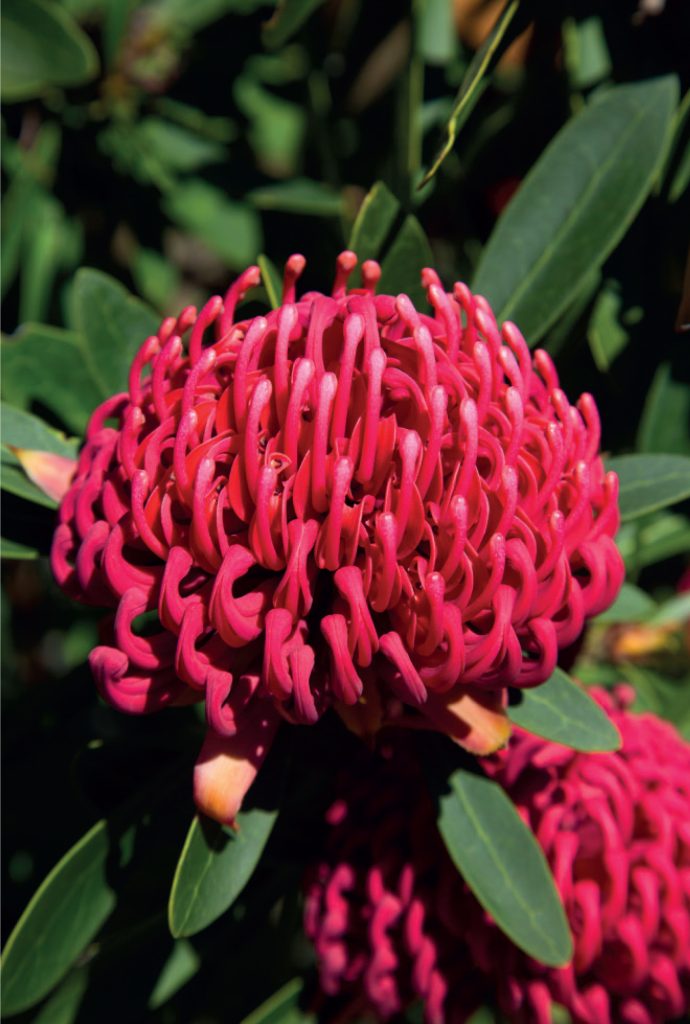
The plants are started from selected propagation material and followed through a growth cycle that ranges from 12 to 18 months. The main flowering occurs between late winter and spring, offering a unique display of colors.
An international product, rooted in the territory
Although production is deeply rooted in the Tuscan territory, the main markets are largely international. France, Northern Europe, and Portugal are among the primary destinations.
This is because Proteaceae, due to their agronomic and climatic characteristics, find ideal conditions in other European contexts, where they can also be grown in open ground. In Italy, on the other hand, potted cultivation is often the most effective solution.
The value of cooperation
One of the key elements of this journey is the role of the cooperative.
Being members of Flora Toscana means having access to:
- a structured commercial network, difficult for a single company to reach
- support in production planning, shared among multiple members
- assistance during more challenging market phases
- the skills and tools needed to face increasingly demanding international markets
Production follows a supply-chain logic: the plants grown on the farm enter the cooperative’s system, which handles marketing and distribution. This model allows companies to focus on production quality while maintaining a competitive presence in the market.
Expertise, vision, continuity
The story of Patrizia and Saverio is a concrete example of how vision and tradition can coexist. The decision to specialize in a complex crop, combined with the support of cooperation, has made it possible to build a solid and recognizable project over time.
In a constantly evolving sector, it is precisely the expertise of the members—together with the ability to collaborate—that represents the true added value.
On our blog, we explore the world of Flora Toscana from multiple perspectives: production, cultivation, sustainability and news. You will find in-depth technical insights, stories about products and projects, updates and seasonal content, all organised by theme to guide you through your reading and offer you fresh inspiration.
